
 By
By 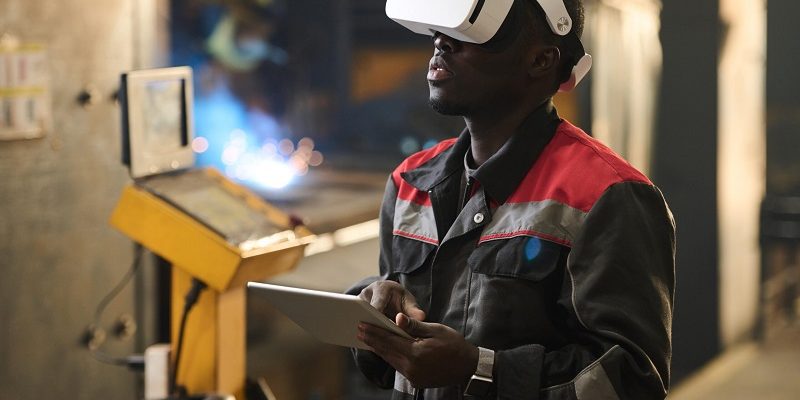
A decade ago, wearable technology in the corporate world rarely extended beyond subsidized fitness bands handed out during annual wellness challenges. Employees logged ten thousand steps to win gift cards, while human resources departments checked a box for employee engagement. Those basic pedometers have since evolved into sophisticated biometric monitors, heads-up sensor displays, and ergonomic trackers. Today, wristbands, smart rings, smart helmets, and posture-correcting garments are no longer novelty accessories; they are becoming integrated components of the modern work environment.
This technological evolution is transforming how companies approach human performance and occupational safety. By providing real-time data on everything from cardiovascular stress to biomechanical strain, wearables promise to reduce workplace injuries, optimize daily schedules, and curb chronic burnout. Yet this intimate fusion of physiological monitoring and enterprise software also introduces complex questions about employee autonomy, cognitive overload, and workplace surveillance.
Moving from Episodic Care to Continuous Occupational Health
Traditional workplace wellness initiatives have historically operated on an episodic model. Companies offered an annual health screening, an occasional flu vaccination clinic, and reactive workers’ compensation claims once an injury had already occurred. Wearables replace this fragmented approach with continuous, preventative insight.
In corporate office and remote settings, devices that monitor heart rate variability, sleep architecture, and sedentary intervals provide early warning signs of chronic exhaustion. Sustained drops in heart rate variability, for instance, signal that the autonomic nervous system is stuck in an elevated stress response. When workers receive objective physiological feedback that their body is running in overdrive, they are far more likely to take restorative breaks before mental fatigue hardens into long-term burnout.
In physically demanding industries, the impact is even more immediate:
-
Thermal stress detection: Sensor bands worn by agricultural or construction crews track core temperature trends and ambient humidity, alerting supervisors to impending heat exhaustion before life-threatening heat stroke sets in.
-
Toxic environmental monitoring: Wearables equipped with chemical sensors detect hazardous gases, airborne particulates, or radiation in manufacturing plants and refineries long before human senses register the danger.
-
Repetitive strain prevention: Clip-on sensors track trunk angles and spine curvature, vibrating gently when an employee bends from the waist rather than the knees while lifting heavy cargo.
By shifting health interventions from after-the-fact treatment to real-time prevention, organizations protect their personnel while dramatically lowering healthcare expenditures and lost workdays.
The Productivity Paradox: Streamlined Workflows vs. Cognitive Fragmentation
The relationship between wearable devices and worker productivity is deeply nuanced. On one hand, ambient computing eliminates physical friction. In logistics hubs and maintenance facilities, technicians wearing smart glasses or wrist-mounted scanners access schematics and inventory coordinates hands-free. Eliminating the need to repeatedly reach for a handheld terminal or clipboard saves valuable seconds on every task, resulting in tangible efficiency gains across high-volume shifts.
On the other hand, bringing notifications directly to the human body introduces significant cognitive hazards. The modern knowledge worker already battles relentless interruptions from email clients and team messaging platforms. Routing those alerts to a buzzing wrist device often accelerates mental fatigue rather than mitigating it.
The Problem of Haptic Alert Fatigue
When a device vibrates against bare skin every few minutes, it bypasses the physical separation that allows an individual to ignore a computer monitor. These constant micro-interruptions destroy deep focus, pulling employees out of flow states and forcing frequent task-switching. Studies of workplace cognition show that re-entering an uninterrupted mental state after a digital distraction takes considerable time. If wearables are configured merely as secondary notification centers, their net contribution to intellectual productivity becomes negative.
To generate genuine productivity gains, enterprises must treat wearables as filters rather than megaphones. Devices should be programmed to suppress routine messages during dedicated deep-work blocks, delivering haptic prompts only for genuine operational emergencies or critical biological pauses.
Transforming Safety in High-Risk Industrial Environments
While desk workers wrestle with notification volume, industrial workers are experiencing a safety revolution driven by specialized wearable hardware. Heavy manufacturing, aviation maintenance, transportation, and warehousing carry inherent physical risks that traditional safety manuals struggle to eliminate.
In long-haul trucking and heavy machinery operations, fatigue-monitoring headwear tracks eye-blink duration and head nodding to identify microsleep episodes before a catastrophic collision occurs. In automotive assembly plants, lightweight upper-body exoskeletons support mechanics during continuous overhead tool operation, dramatically reducing musculoskeletal shoulder injuries.
These interventions alter the financial reality of workplace operations. Musculoskeletal disorders represent billions of dollars in annual workers’ compensation claims and indirect replacement costs. By inserting physical support and biometric warnings directly into the physical labor loop, companies safeguard their workforce while preserving operating margins.
The Ethical Tightrope: Navigating Privacy, Trust, and Surveillance
The most volatile challenge facing enterprise wearable adoption is not battery life or sensor calibration; it is employee trust. The boundary between legitimate corporate care and predatory digital micromanagement is extraordinarily fragile.
When a device tracks an employee’s physical movement, location, heart rate, and fatigue levels, workers understandably worry that physiological data will be weaponized against them. Concerns quickly arise:
-
Will an elevated heart rate during a performance review be construed as incompetence?
-
Will brief lapses in physical movement be flagged by automated attendance algorithms as slacking off?
-
Could aggregate biometric trends be shared with health insurers to raise individual premiums or deny promotions?
When employees feel that a device serves as digital boss-ware, the psychological result is intense resentment, defensive compliance, and heightened anxiety—the exact opposite of wellness. The very tool designed to alleviate stress becomes its primary cause.
To navigate this ethical minefield, leadership teams must establish clear, non-negotiable data boundaries. Biometric health data must remain strictly confidential and quarantined from managerial performance reviews. Companies should utilize third-party platforms that present data to management only in anonymized, high-level aggregates. A department manager should see that overall team strain is elevated, suggesting a need to adjust project deadlines, without ever identifying which specific employee logged inadequate sleep or experienced an elevated pulse.
Establishing a Sustainable Path Forward
Wearable technology holds immense promise for reshaping the relationship between human labor and physical well-being. When deployed with careful attention to human biology and personal dignity, these tools turn workplaces into safer, more adaptive environments where health risks are caught early and physical strain is systematically mitigated.
Realizing that potential requires leadership that values human agency over raw data harvesting. The organizations that succeed with wearable integration will not be those that monitor every heartbeat to extract maximum labor from their workforce. They will be the companies that use ambient technology transparently, protecting individual privacy while creating sustainable conditions where employees can thrive both professionally and physically.






Comments