
 By
By 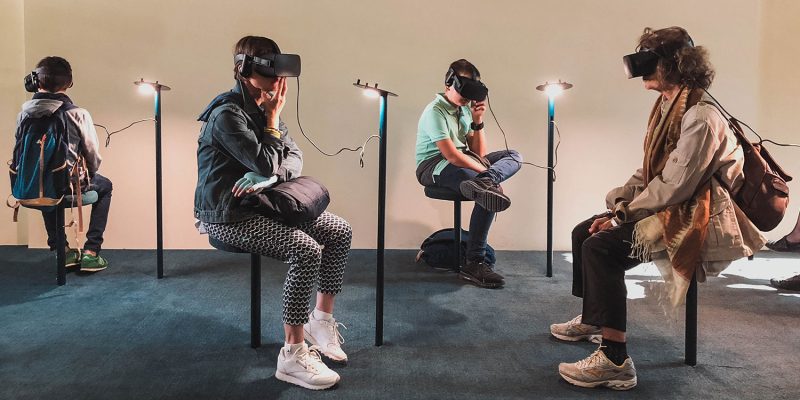
The entertainment industry is experiencing a profound transformation. The traditional boundaries between audience and story are dissolving, giving birth to a new era — immersive storytelling. From virtual reality (VR) cinemas to interactive Netflix episodes and AI-generated art, technology is reinventing how stories are told, experienced, and remembered. This evolution isn’t just about new gadgets; it’s about changing the emotional and psychological relationship between creators and audiences.
The Shift from Passive Viewing to Active Participation
Once upon a time, entertainment was linear — you sat in a dark room, watched a movie, and left. Today, you might step into that movie, explore its world, and even influence its outcome. This is the essence of immersive storytelling — turning spectators into participants.
Interactive films like Bandersnatch by Netflix and immersive theatre productions such as Sleep No More have pioneered experiences that give viewers agency. The audience is no longer just consuming; they are co-creating the narrative. This paradigm shift has created deeper engagement levels, making entertainment more personal, memorable, and emotional.
Why Audiences Crave Immersion
Modern audiences, especially Gen Z and Millennials, crave experiential depth. They don’t just want to watch a hero’s journey; they want to live it. The rise of gaming, AR filters, and metaverse platforms has conditioned audiences to expect multi-sensory, responsive experiences. Immersion satisfies three powerful desires:
-
Control – The ability to influence outcomes.
-
Connection – Emotional proximity to the story and characters.
-
Continuity – Experiences that extend beyond a single screen or platform.
The Technological Backbone of Immersive Storytelling
Immersive entertainment wouldn’t exist without rapid technological advancements. From AI algorithms that craft adaptive storylines to VR headsets that simulate real-world physics, innovation is the engine driving this cultural shift.
1. Virtual Reality (VR) and Augmented Reality (AR)
VR and AR are no longer futuristic concepts — they’re mainstream storytelling tools. Virtual reality enables users to step inside fictional worlds, while augmented reality layers digital narratives onto real-world environments.
For instance, VR films like Carne y Arena by Alejandro G. Iñárritu let audiences experience the refugee crisis firsthand, blending empathy with immersion. AR, on the other hand, turns the world into a living canvas — imagine seeing a ghostly performance through your phone while walking through a historic street. Such hybrid realities redefine audience engagement.
2. Artificial Intelligence and Procedural Storytelling
AI isn’t just a background tool — it’s becoming a creative partner. Platforms are now leveraging machine learning to create adaptive storylines that change based on viewer input. Video games like Detroit: Become Human or Until Dawn use AI to track user decisions and generate unique narrative outcomes.
In streaming, AI-driven recommendations and content personalization mean no two audience journeys are identical. In the future, AI may craft fully personalized movies, adjusting dialogue, pacing, and emotion to fit each viewer’s psychological profile.
3. Motion Capture and Real-Time Rendering
Modern storytelling thrives on realism. Motion capture technology, which records the movements of actors and translates them into digital avatars, allows filmmakers to create emotionally resonant, photorealistic performances. Combined with real-time rendering engines like Unreal Engine, creators can build dynamic worlds that evolve instantly — no post-production delays, no static environments.
This technology has already reshaped productions like The Mandalorian, where virtual sets replaced traditional green screens, creating hyper-realistic environments that react to lighting and movement in real time.
The Emotional Science Behind Immersion
At the core of immersive entertainment lies empathy engineering — designing emotional triggers that make users feel part of the story. Studies in cognitive psychology show that interactive narratives activate the brain’s mirror neuron system, making participants internalize emotions more deeply.
When a viewer makes a moral choice in a VR simulation or saves a character in a narrative game, they experience ownership of consequence. This creates stronger emotional connections than passive watching ever could. In essence, immersive storytelling transforms empathy from an abstract concept into a visceral experience.
The Cultural Impact of Immersive Entertainment
Redefining Art and Audience Relationships
Immersive entertainment has blurred the lines between creator and consumer. Artists no longer just tell stories — they build worlds that audiences inhabit. This democratization of creativity empowers fans to become collaborators, remixing and expanding on the original narrative through fan art, mods, and interactive participation.
Reimagining Traditional Media Spaces
Cinemas, theatres, and museums are evolving into multi-sensory arenas. Museums now use projection mapping and AR to make exhibits interactive. Theatres experiment with live audience input that can change performances. Even concerts incorporate holographic effects and VR elements, turning each show into a unique sensory journey.
Commercial and Branding Evolution
Brands are capitalizing on immersive storytelling to build experiential marketing campaigns. Nike’s “Reactland” allowed users to run inside a digital game world wearing Nike shoes, while Netflix promoted Stranger Things through AR-based scavenger hunts. These experiences transform passive advertisements into participatory narratives, making marketing itself an act of entertainment.
Challenges of Immersive Storytelling
While the rise of immersive experiences is exciting, it comes with its own set of challenges:
-
High Production Costs: Building immersive worlds requires expensive technology and talent.
-
Accessibility Issues: Not everyone has access to VR headsets or AR-compatible devices.
-
Ethical Concerns: Immersive environments blur reality, raising questions about data privacy, emotional manipulation, and psychological effects.
-
Storytelling Complexity: Designing interactive plots that remain coherent across countless user choices is a daunting narrative challenge.
Creators must balance innovation with responsibility, ensuring that immersion enhances — not exploits — audience engagement.
The Future: Where Immersive Entertainment Is Headed
The future of entertainment lies in convergence — where cinema, gaming, theatre, and social interaction merge into unified experiences. Imagine a world where:
-
You attend a concert in the metaverse with friends across continents.
-
AI-generated actors evolve emotionally over multiple episodes.
-
Your smartwatch tracks your pulse and adjusts the horror movie’s intensity accordingly.
This is not distant science fiction; these technologies are already in development. The ultimate goal is to create fully responsive entertainment ecosystems where the story lives, breathes, and evolves with the audience.
The Ethical and Emotional Balance Ahead
As storytelling becomes more immersive, creators will wield unprecedented emotional influence. This power demands ethical responsibility. Designers must ensure consent, transparency, and emotional safety — especially in VR experiences that can trigger real-world fear or trauma.
Yet, when done right, immersive storytelling has the potential to be the most powerful empathy machine ever built — capable of educating, healing, and uniting people across boundaries.
Frequently Asked Questions (FAQ)
1. What makes immersive storytelling different from traditional storytelling?
Immersive storytelling allows audiences to actively participate, influence outcomes, and experience stories through sensory engagement, unlike passive traditional narratives.
2. Is immersive entertainment only possible with VR technology?
No. While VR enhances immersion, it also exists in AR, interactive films, metaverse experiences, and even live theatre using digital elements.
3. How is AI contributing to immersive entertainment?
AI personalizes narratives, predicts audience reactions, and generates adaptive storylines, creating unique experiences for every viewer or player.
4. What industries beyond film and gaming are adopting immersive storytelling?
Education, healthcare, tourism, and marketing sectors are integrating immersive techniques for training, therapy, and experiential engagement.
5. Are immersive experiences suitable for all audiences?
While exciting, they can be overwhelming for some users due to sensory overload or motion sickness. Accessibility features are improving to make them more inclusive.
6. Can immersive storytelling replace traditional cinema?
Not entirely. Traditional cinema offers shared emotional experiences, while immersive formats provide personalization. Both will likely coexist and complement each other.
7. What is the next big innovation in immersive entertainment?
The integration of neural feedback technology, where brain signals influence the narrative in real time, is expected to redefine the next phase of immersive storytelling.






Comments