
 By
By 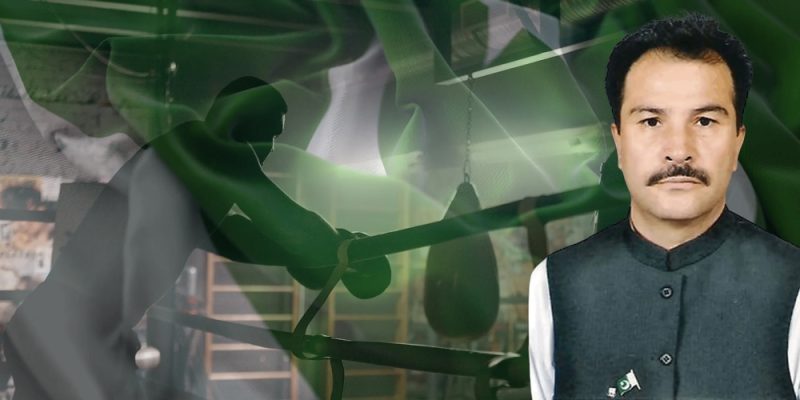
On June 16, 2011, Syed Abrar Hussain left his office near Ayub National Stadium in Quetta and was shot dead by two gunmen on a motorcycle. He was 50 years old. He had been a three-time Olympian, an Asian Games gold medalist, a national hero decorated with the Sitara-i-Imtiaz and the President’s Gold Medal. He had spent his post-competition years coaching young boxers and serving as deputy director of the Pakistan Sports Board and chairman of the Balochistan Provincial Sports Board. The banned sectarian militant group Lashkar-e-Jhangvi claimed responsibility. No arrests were made.
The Pakistan Boxing Federation called his death an irreparable loss. Olympian Hussain Shah, who was in Japan, said it was unbearable. A young Muhammad Waseem, who had visited Hussain’s training camp in Islamabad just weeks earlier to receive coaching tips ahead of a tournament in China, described it as a huge loss for Balochistan and Pakistani boxing. The national tournaments were postponed. Then the mourning ended, investigations went nowhere, and Abrar Hussain began the gradual slide toward obscurity that seems to claim Pakistani sporting figures who don’t have a film made about them.
His career deserves more than a footnote.
Alamdar Road and the Making of a Boxer
Hussain was born on Feb. 9, 1961, in Mehrabad, a neighborhood on Quetta’s Alamdar Road — the same street that would later produce Haider Ali and Asghar Ali Changezi, forming one of the most concentrated clusters of elite boxing talent in Pakistani sporting history. All three trained under coach Habibullah Jaferi, who held free coaching sessions at the Taji Khan Hazara Sports Complex six days a week and whose contribution to Quetta boxing spanned decades without meaningful government support.
The Hazara community’s relationship with boxing was partly practical. As Habibullah explained in later interviews, football and boxing were paths toward employment for boys from poor families. A national-level boxing career could land a position with Pakistan Railways, Wapda or the Pakistan Sports Board — the kind of institutional job that provided steady income in a city where most livelihoods were precarious. Hussain took that path. He took it further than almost anyone else from his neighborhood.
An International Career Built Across Three Olympic Cycles
Hussain made his international debut at the 1983 Asian Boxing Championship in Japan and came home with a bronze medal in the light middleweight division. The following two years established him as a force on the regional circuit. He won gold at the 1985 South Asian Games in Dhaka, the same year his Lyari contemporary, Hussain Shah, dominated the Asian amateur ranks. The two men competed in different weight classes but represented the same generation of Pakistani boxing excellence.
His Olympic record across 1984 Los Angeles, 1988 Seoul, and 1992 Barcelona was less decorated — he exited in the preliminary rounds at each Games — but three Olympic appearances over eight years measure a career’s sustained competitiveness. Many boxers who win regional gold medals never qualify for a single Olympics. Hussain qualified for three.
The defining result came at the 1990 Asian Games in Beijing, where he won the gold medal in the light middleweight division at 71 kg. That victory earned him the Sitara-i-Imtiaz that year and the President’s Gold Medal in 1991. He also won gold at the South Asian Games in Islamabad in 1989 and Colombo in 1991. Throughout his career, he won 11 gold, 6 silver, and 5 bronze medals at national and international competitions — a total that places him among the most decorated Pakistani boxers of any era.
After Competition: Staying When Others Left
Hussain’s post-boxing life was defined by a choice many of his contemporaries did not make. Hussain Shah moved to Japan. After winning the 2002 Commonwealth gold, Haider Ali eventually settled in the UK. Hussain stayed in Quetta, working within the Pakistan Sports Board system to coach the next generation and administer provincial sport. He turned down a transfer to Islamabad, reportedly because he wanted to keep serving the people of Quetta directly.
That commitment to Quetta came at a cost he understood. In his last interview, published in the Daily Express on June 10, 2011 — six days before his murder — he spoke openly about his distress over the deteriorating security situation in Balochistan and the effect it was having on sports. Targeted killings had been rising for years. Crowds at boxing events had dropped, according to coach Habibullah, because the Hazara community didn’t feel safe gathering in public. “You need to have peace of mind to be a good boxer,” Habibullah said later. “Where is the peace?”
Hussain’s trainee, Mohammed Ali, told reporters after the murder: “I have yet to see the police arrest anyone responsible for such killings.” He was describing a pattern, not an anomaly.
What Was Lost
The impact of Hussain’s assassination on Quetta boxing extended beyond the immediate grief. His departure removed a central figure in the city’s coaching and administrative infrastructure at a moment when that infrastructure was already under strain. Habibullah continued his work at Alamdar Road, but the combination of violence, economic hardship, and the departure or death of key figures had measurably weakened Quetta’s once-dominant boxing culture by the time journalists were writing about it toward the end of the decade.
Muhammad Waseem, who emerged from Quetta in the years after Hussain’s death to become Pakistan’s first world professional champion, trained in a landscape shaped partly by what Hussain had built and partly by the vacuum his killing created. Waseem has spoken about what young boxers from Quetta go through — the lack of facilities, the absence of financial backing, and the need to travel internationally just to find adequate sparring partners. Those conditions existed in Hussain’s time, too, but the administrative and coaching capacity Hussain brought to Quetta’s boxing infrastructure was not easily replaced.
Abrar Hussain won 11 international gold medals, competed at three Olympics across eight years, dedicated his post-competition life to coaching and sports administration in a city where that work required courage, and was killed for reasons that had nothing to do with boxing and everything to do with who he was. Pakistan’s sporting memory should hold that record more firmly than it does.







Comments