
 By
By 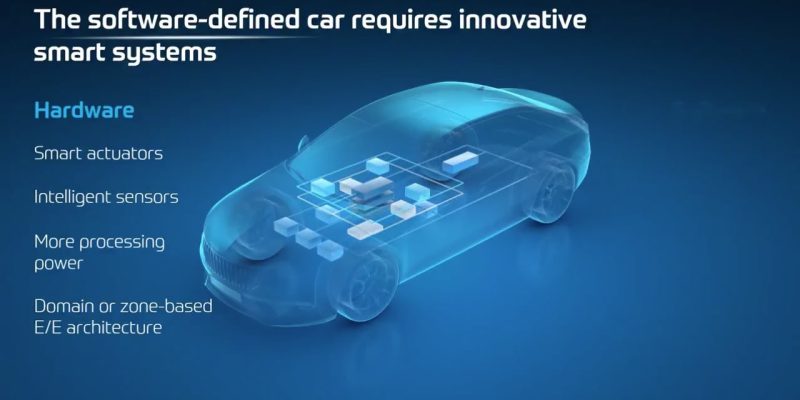
In today’s automotive world, the traditional image of a car as a purely mechanical machine is fading fast. Instead, vehicles are rapidly evolving into software-defined systems—where the underlying hardware provides a platform for a vast menu of functions, features, and updates. This article dives deep into this advanced, non-generic topic: how vehicles are shifting from hardware-first machines to software-centric mobility platforms, and the implications for manufacturers, developers, service providers and fleets.
What does “Vehicle Software-Defined Functions” mean?
Defining the concept
Software-defined functions (SDFs) in vehicles refer to features and capabilities that are implemented, controlled or enhanced via software over a standardized hardware platform. The hardware may include sensors, ECUs (electronic control units), compute modules, connectivity units and actuators—but the key is that many features are delivered, upgraded or adapted via software.
This is different from older vehicles where features were hard-wired or mechanically integrated; today the car is more like a smartphone on wheels. Epicflow+1
Why the shift is accelerating
-
Hardware platforms like skateboard EV architectures: With EVs, the underlying hardware (battery pack, motor, wiring loom) can be reused across multiple models, leaving more head-room for differentiation via software. Wikipedia
-
Cost pressure & scalability: Using a common hardware architecture but differentiating via software allows manufacturers to scale, reduce parts variance, and deliver features via OTA (over-the-air) updates.
-
Changing consumer expectations: Drivers expect their vehicles to behave more like devices—receiving updates, new features, personalization and connectivity.
-
Regulatory and safety demands: As vehicles become more connected and autonomous, software becomes central to functionality and safety certification.
Key Domains of Vehicle Software-Defined Functions
Let’s break down five major domains where SDFs are transforming the vehicle-value chain.
1. Vehicle Compute & Domain Controllers
Modern vehicles increasingly replace many discrete ECUs with consolidated domain controllers or centralized compute stacks. These units host multiple functions—from chassis control to driver assistance to infotainment. The software architecture in these units allows modules to be upgraded or repurposed without physical hardware changes.
For example:
-
A domain controller may host body & comfort functions (windows, lights, seats) and later on be upgraded via software to host new comfort-services or remote features.
-
In-vehicle AI chips and software stacks are being developed to enable complex perception, infotainment and autonomy functions.
2. OTA Updates & Feature Activation (FOTA)
One of the most visible examples of SDFs is the ability to add or unlock features post-purchase:
-
Feature-on-demand: A vehicle may ship with hardware capable of adaptive cruise control, but the feature is locked and activated later via software license.
-
Bug-fixes and incremental improvements: Vulnerabilities, software bugs or performance issues can be corrected without a physical recall—reducing cost and downtime.
-
New features over time: A brand might release additional driving modes, personalization packs or even performance upgrades via OTA updates or mobile apps.
This model transforms vehicles into evolving ecosystems—not static fixed assets.
3. Autonomy, Driver Assistance & Monitoring as Software Services
Advanced driver assistance systems (ADAS) and driver monitoring are rich areas for software-driven differentiation:
-
Driver monitoring (DM) systems leverage cameras, IR sensors and ML algorithms to detect drowsiness, distraction or other risk states. arXiv
-
Sensor fusion and perception software stack upgrades may improve lane-keeping, adaptive cruise, emergency braking or hands-free driving.
-
These capabilities are often delivered as software modules layered on top of hardware sensors and compute boards.
Therefore, OEMs and Tier-1 suppliers must treat autonomy and driver assistance like software products with versioning, patches and lifecycle management.
4. Connectivity, Data Platforms & Cloud Integration
Vehicles are now nodes in a larger ecosystem: connected to cloud, fleet platforms, infrastructure and mobile devices. Software-defined functions in this domain include:
-
Telematics services: remote diagnostics, predictive maintenance, usage-based insurance.
-
Data analytics: behaviors, patterns, battery health, fleet optimization.
-
Personalized user profiles: unlocking seats, adjusting settings, infotainment preferences.
-
Mobility services: subscription models, feature-on/demand, shared mobility where software manages access and permissions.
Connectivity layers become part of the vehicle’s software stack, enabling real-time updates, diagnostics and remote control.
5. Business Models, Monetisation & Security
Moving to software-defined vehicles impacts the business model:
-
Feature subscriptions: instead of paying full price upfront, some features can be paid for over time or activated when needed.
-
Lifecycle monetisation: Software updates, premium packages, subscriptions and apps become revenue streams long after sale.
-
Security & safety: Software introduces cybersecurity risks and liability concerns; update mechanisms, intrusion detection and fail-safe architectures must be built in from the start.
-
Regulatory compliance: As functions shift to software, OEMs must manage safety certifications, recalls, remote update governance and data privacy.
Challenges in Implementing Vehicle Software-Defined Functions
While the potential is enormous, several challenges must be addressed:
Software architecture complexity
Vehicles historically were mechanical/electrical. Now they must integrate complex software stacks (operating systems, middleware, apps). This complexity triggers issues like:
-
Software bloat and maintenance overhead
-
Version compatibility across hardware generations
-
Standardisation of interfaces between modules
Hardware-software decoupling
To truly enable SDFs, hardware must be sufficiently abstracted so that software modules can be deployed, updated or retargeted. But if hardware is too fixed, the flexibility is limited. Ensuring future-proof hardware platforms and backward compatibility becomes tricky.
Cybersecurity and functional safety
Software opens new attack surfaces. Ensuring safety-critical functions (brakes, steering, vehicle dynamics) behave correctly and securely under all conditions is paramount. Standards like ISO-26262 (functional safety) and ISO/SAE 21434 (automotive cybersecurity) require robust software governance.
Regulatory and certification hurdles
When functions migrate to software, OEMs must still certify vehicles and often re-certify when software changes impact behavior. Regulatory frameworks are evolving but often lag technology. Software updates may require regulatory approvals depending on region.
Feature fragmentation and lifecycle management
A vehicle with heavily software-defined features may diverge significantly from one software version to the next. Managing configurations, ensuring compatibility, providing long-term support (for 8-10 year vehicle life), and ensuring updates for older hardware poses operational burdens.
Strategic Implications for OEMs & Suppliers
OEMs must rethink roles
Traditional OEMs must shift from hardware integrators to software companies. This means building internal capabilities in agile software development, managing lifecycle services, dealing with cloud/back-end, licensing, data analytics and customer engagement.
Tier-1 suppliers become software engines
Suppliers historically producing mechanical parts must shift to delivering software modules, platforms, and services. Their value is increasingly tied to software differentiation, update mechanisms and data integration.
Aftermarket and service networks evolve
Rather than simply fixing mechanical parts, service networks must now handle software updates, cybersecurity patches, remote diagnostics and over-the-air servicing. Skills must shift toward software and connectivity.
Fleet customers and mobility services benefit
For fleet operators, software-defined functions mean:
-
Ability to activate/deactivate features depending on usage
-
Use data analytics to optimise uptime, maintenance schedules and performance
-
Flexibility in feature upgrades to match changing business models
End-users expectations change
Drivers increasingly expect their vehicle to evolve and receive new features over time. Manufacturers who fail to deliver a robust software experience risk losing brand loyalty.
Concrete Use-Case Scenarios
Use-case 1: Unlocking performance mode via software
An EV manufacturer builds a high-performance “track mode” but ships all vehicles with identical battery/motor hardware. The performance mode remains locked. Later, the user purchases the “track package” and the OEM pushes a software update unlocking higher power output, revised thermal management and a custom dashboard gauge. This is pure software monetisation on the same hardware platform.
Use-case 2: Subscription-based driver assistance
A vehicle is equipped with hardware for Level 2+ driver assistance (adaptive cruise, lane-keep, hands-free on highway). The OEM offers the “Highway Assist” subscription for one year. When subscribed, the software enables the module and provides cloud support, monitoring and OTA improvements. After 12 months the subscription can be renewed, paused or canceled.
Use-case 3: Fleet telematics service with predictive maintenance
A logistics fleet operator uses the vehicle’s connectivity to feed data into a predictive analytics platform. The software stack monitors battery health, motor temperature, axle vibrations, driver behavior and predicts when service is required. The updates are delivered regularly via software and allow the fleet operator to optimise uptime and cost.
Best Practices for Implementing SDF in Automotive Projects
-
Define a robust software-hardware boundary: Ensure hardware platforms are designed with future updates in mind, with flexible compute, memory, interfaces and connectivity.
-
Use modular software architecture: Adopt microservices, containerisation and dynamic update capabilities to deliver features independently with minimal disruption.
-
Maintain a strong cybersecurity framework: Embed update authentication, intrusion detection, secure boot and fail-safe modes from day one.
-
Plan for lifecycle support: Vehicles have long lifespan; ensure update mechanisms, version control, backward compatibility and legacy hardware support are considered.
-
Align business model and customer value: Decide early whether features will be unlocked, subscribed, tiered or monetised post-sale; design software stacks accordingly.
-
Monitor performance and user feedback: Use connected data and analytics to track software feature performance, reliability, customer usage and iterate accordingly.
-
Ensure compliance and traceability: Maintain software change logs, validation, certification pathways and be prepared for auditing by regulators or insurers.
Outlook: What the Next 5–10 Years Will Bring
-
Mass software-first vehicles: Many new vehicles will launch with a unified hardware platform and features delivered via software updates over time rather than fixed at sale.
-
Software markets within cars: Apps, features, and functionality may be purchased and installed like smartphone apps—charging a la carte for interior ambience, driver assistance, infotainment skins.
-
Greater data connectivity & ecosystem integration: Vehicles will become nodes in larger mobility ecosystems—connected to home energy, grid, smart city infrastructure and personal devices.
-
Hybrid hardware-software evolution: While hardware upgrades will still matter (new battery tech, sensors, compute modules), software will increasingly determine vehicle differentiation and longevity.
-
New players and service-oriented models: OEMs may partner with software, cloud and data companies; mobility providers may treat vehicles as platforms for continuous updates, services and monetisation.
-
Regulatory adaptation: As software dominates, regulators will shift focus from single hardware components to software versioning, update governance, cybersecurity and functional safety in the live vehicle.
Conclusion
The evolution of vehicles into software-defined platforms is no longer futuristic—it’s happening now. For the automotive industry, this shift is transformative: from manufacturing, service, business models and customer relationships. OEMs, suppliers, fleet operators and tech providers must embrace a software-first mindset. The value will increasingly lie not in the hardware alone, but in the agility, connectivity and continuously-updated feature set of the vehicle. In short: the wrench stays in the toolbox—but the real mission becomes code, connectivity and continuous innovation.
Frequently Asked Questions (FAQ)
1. Why is software-defined vehicle functionality important for new cars?
It transforms vehicles from static machines into evolving ecosystems. It allows upgrades, feature activation, monetisation and constant improvement, thereby improving user value and manufacturer flexibility.
2. How does software licensing for vehicle features work?
Manufacturers can ship hardware capable of certain functions (e.g., lane-keeping assist), but lock the feature via software. The user can then purchase, subscribe or unlock the feature via an app or vehicle interface, enabling dynamic business models.
3. Does software-defined functionality compromise vehicle safety?
No—if managed properly. In fact, software updates can improve safety over time (bug fixes, improved algorithms). However, it does require robust certification, cybersecurity and lifecycle support to ensure safety remains intact.
4. What happens to older vehicles in a software-defined world?
Legacy models may still receive updates, but there can be hardware limitations. Manufacturers must plan for backward compatibility or clearly communicate which vehicles will support ongoing updates.
5. How will service centres adapt to software-defined vehicles?
They will need to develop capabilities beyond mechanical repair: handling OTA updates, software diagnostics, cybersecurity, remote servicing, and connected-vehicle data analytics alongside traditional mechanical work.
6. Can aftermarket providers offer software locked features?
Potentially yes—but with caution. Because software features are tied to vehicle safety and regulatory compliance, aftermarket software unlocking may risk warranty, legality or safety. OEMs typically retain control over licensed features.
7. What are the main obstacles to wide adoption of software-defined vehicle models?
Key obstacles include hardware standardisation, software complexity, regulatory certification, cybersecurity, consumer acceptance of subscription models and ensuring long-term support for vehicle lifespans.







Comments